miHoYo's First UE5 Realistic Fantasy Epic: Ambition and Challenges Behind Zero Marketing
This article breaks down miHoYo's new UE5 realistic open-world project's cross-platform connectivity, ecological AI, dynamic NPCs, and hundred-player confrontation strategies.
miHoYo’s First UE5 Realistic Fantasy Epic: Ambition and Challenges Behind Zero Marketing
Introduction
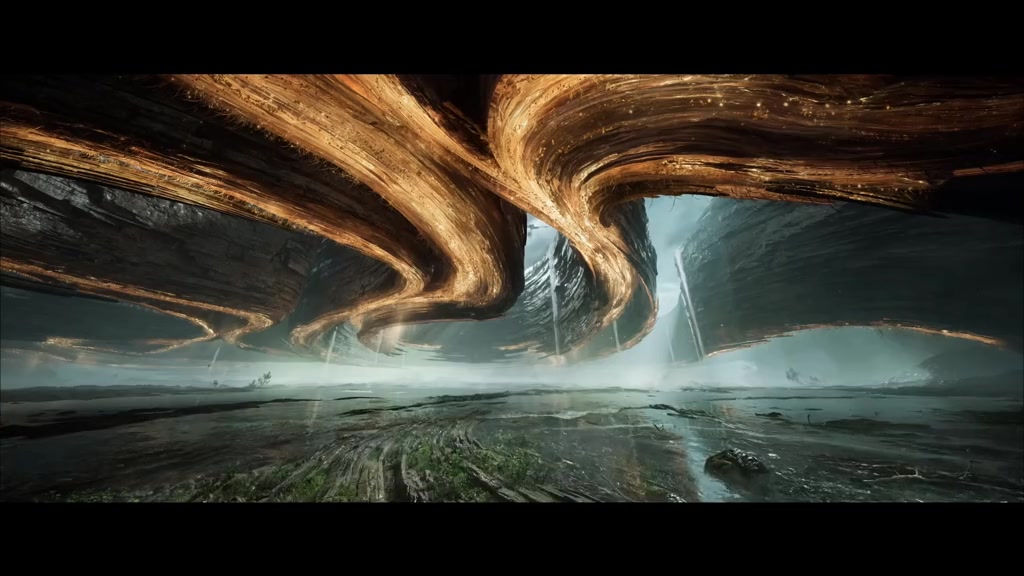
Just yesterday, miHoYo quietly announced a brand new project still in the “prophecy stage” — a fantasy open-world game powered by Unreal Engine 5 with a realistic art style. No name, no character designs, no world-building setup — just a 19-second demo video and a few vague lines of text on the official website. However, as miHoYo’s first strategic product to fully transition to UE5 and a realistic style, it quickly ignited heated discussion in the player community. This article will systematically梳理 the currently known clues, analyze its technical路线, design logic, and market implications, and restore the true轮廓 of this “unnamed revolution.”
Background
Since Genshin Impact restructured the global mobile gaming landscape in 2020 with its cross-platform, high-quality art, and free-to-play model, miHoYo has been deeply tied to the successful paradigm of “anime-style + open world + cross-platform connectivity.” However, in recent years, the industry has been experiencing structural inflection points: AI-driven NPC interactions, the cinematic realism of UE5 Nanite/Lumen, and the rising popularity of the “open world + strong co-op” paradigm validated by works like Elden Ring and Monster Hunter: Rise. At the same time, domestic realistic MMOs have long faced issues like user habit gaps, high development costs, and模糊 monetization paths. In this context, miHoYo’s “zero information” announcement is neither a hasty experiment nor a strategic pivot, but a precise positioning move using technology as a spear and ecosystem as a shield — it attempts to carve out a third path between single-player open worlds and traditional MMORPGs: a “next-generation collaborative fantasy world” deeply involving AI, supporting hundred-player dynamic confrontation, and compatible with both PC and mobile platforms.
Main Points
Cross-Platform Connectivity: Not a Compromise, But an Infrastructure-Level Necessity
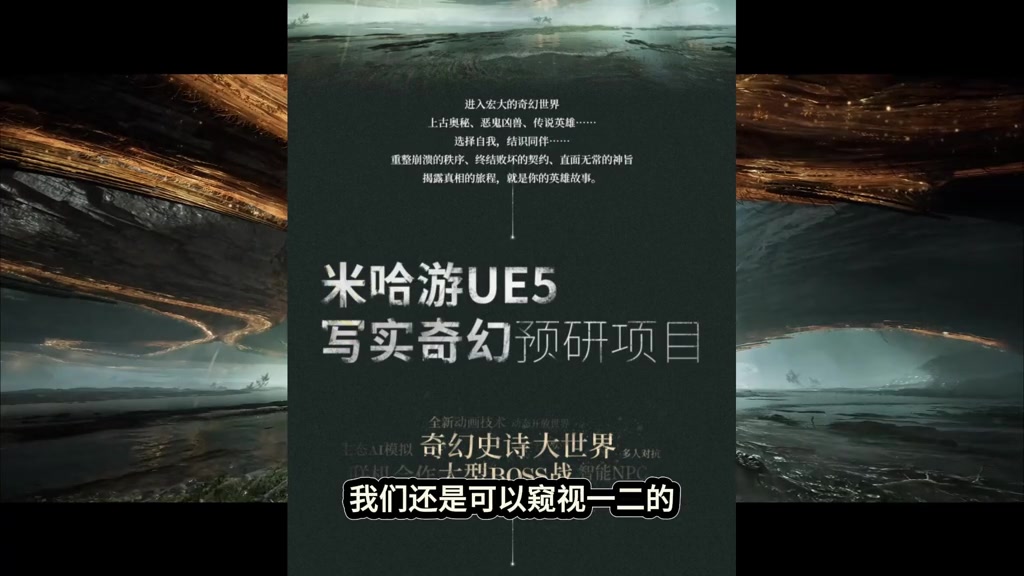
miHoYo’s official website explicitly states that this title will achieve PC and mobile “cross-platform connectivity.” This is not a simple replica of the Genshin Impact model, but a fundamental architectural decision. The core competitive dimension of current mainstream online games has long shifted from graphical fidelity to user scale and active playtime — abandoning mobile means actively cutting off a user pool of over 800 million Chinese smartphone users. Especially with the maturation of 5G and cloud gaming infrastructure, cross-platform isn’t just about entry points, but also determines data asset沉淀 efficiency: players complete NPC dialogue and character progression during their commute, then engage in boss battles on PC, with all behavioral data synced in real-time to a unified account system. This “seamless scenario switching” capability is essentially an ultimate stress test for miHoYo’s self-developed server middleware and cross-platform state synchronization protocol. As the subtitle states, “Abandoning mobile is like cutting off your own arm,” and what miHoYo aims to forge is a double-edged sword capable of simultaneously splitting the fragmented mobile scenario and the immersive PC experience.
Post-Apocalyptic Worldview: Potential for Narrative Elevation Beneath a Conventional Shell
Although the trailer didn’t reveal specific settings, keywords in the official website text like “collapse of order, corruption of contracts, chaotic world” clearly point to a post-apocalyptic narrative framework. This genre is often criticized as a “cliché,” but miHoYo’s past experience shows its true strength lies in transforming genre conventions into emotional anchors: in Honkai Impact 3rd, the “Herrscher-Human” opposition hides existentialist questioning; in Genshin Impact, Sumeru’s rainforest uses the “Tree of Wisdom” to metaphorize knowledge monopoly and cognitive violence. If this logic continues in the new project, the “collapse of order” may not simply be a disaster background, but become a narrative anchor for gameplay mechanics — for example, the irreversible decay of NPC memories in the ecological AI simulation system, dynamic changes in regional lighting based on “contract values,” or even player choices permanently altering the map topology. When “uncovering the truth” is no longer just a quest chain, but a cognitive puzzle woven together through environmental storytelling, AI dialogue, and physics simulations, the conventional narrative gains cinematic immersive depth.
Ecological AI and Dynamic NPCs: The Tipping Point from “Option Trees” to “Living World”
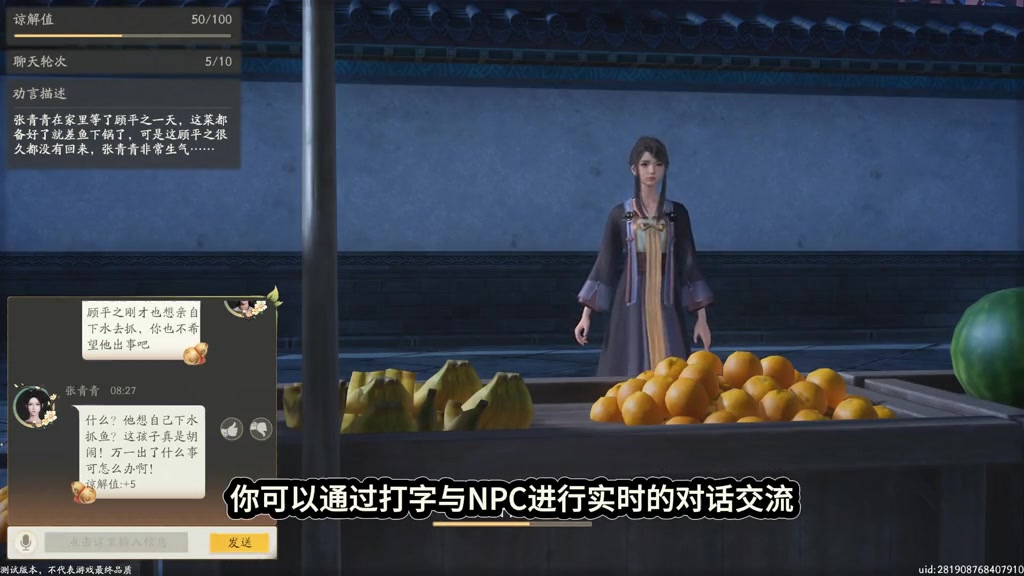
The subtitles specifically note that this title will employ “ecological AI simulation” and “crafted NPC” technologies, directly targeting the open world’s biggest pain point: the feeling of artificiality. Currently, NPCs in most games are still puppets on preset scripts. The system miHoYo is referencing clearly points to real-time semantic understanding and behavior generation based on large models — players can input natural language questions like “Who started the fire in the eastern market last night?” and the NPC will not only retrieve database answers, but also provide contradictory, evasive, or诱导性 responses based on their own identity (night watchman / arsonist relative / black market merchant), triggering连锁 events. Referencing the AI NPC dialogue system already implemented in Justice Mobile, it is backed by a thousand-level character personality model and a million-level dialogue knowledge graph. For miHoYo, the two-year development period coincides with the explosion of multimodal large models. Its goal may be to build the first open world supporting “ten-thousand-player asynchronous AI ecology”: NPCs with independent schedules, memories, social networks, and even the ability to undergo群体情绪迁移 based on player behavior. When “making friends” is no longer about collecting cards, but witnessing a living society that will distance itself from you for breaking trust and devote itself to you for lending a hand, the word “world” in open world truly lands.
Hundred-Player Confrontation: Finding a New Balance Between Elden Ring and Final Fantasy XIV
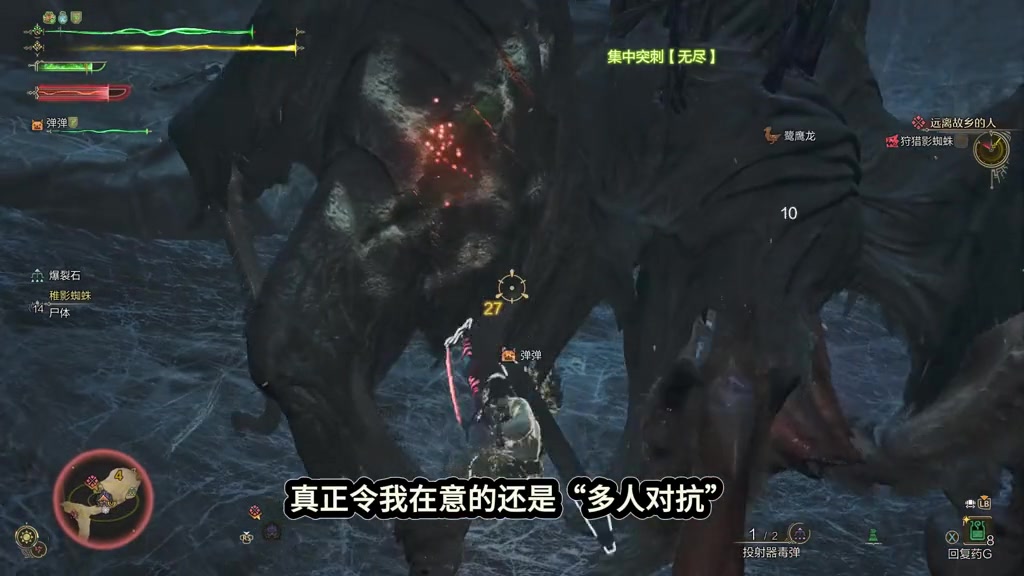
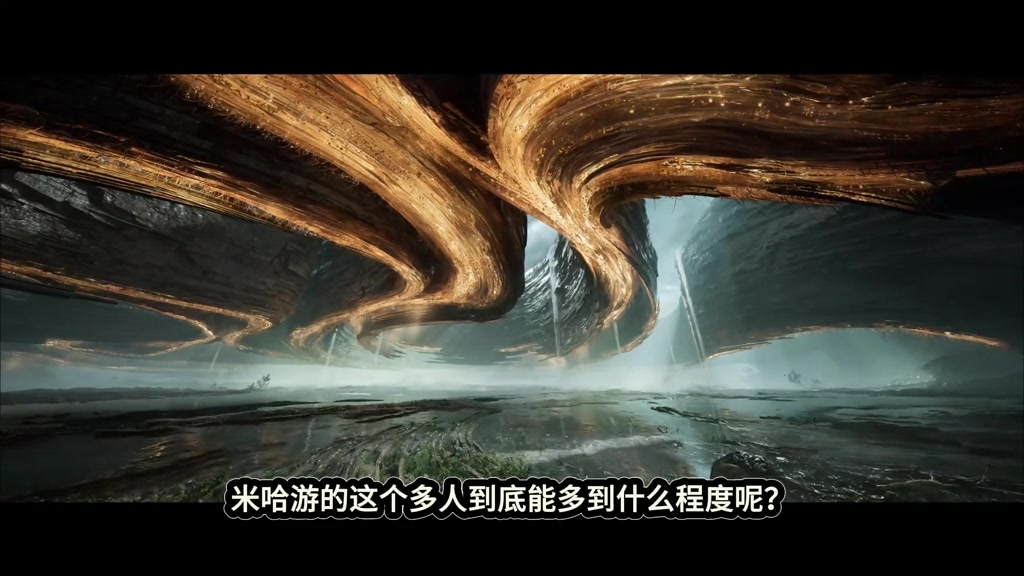
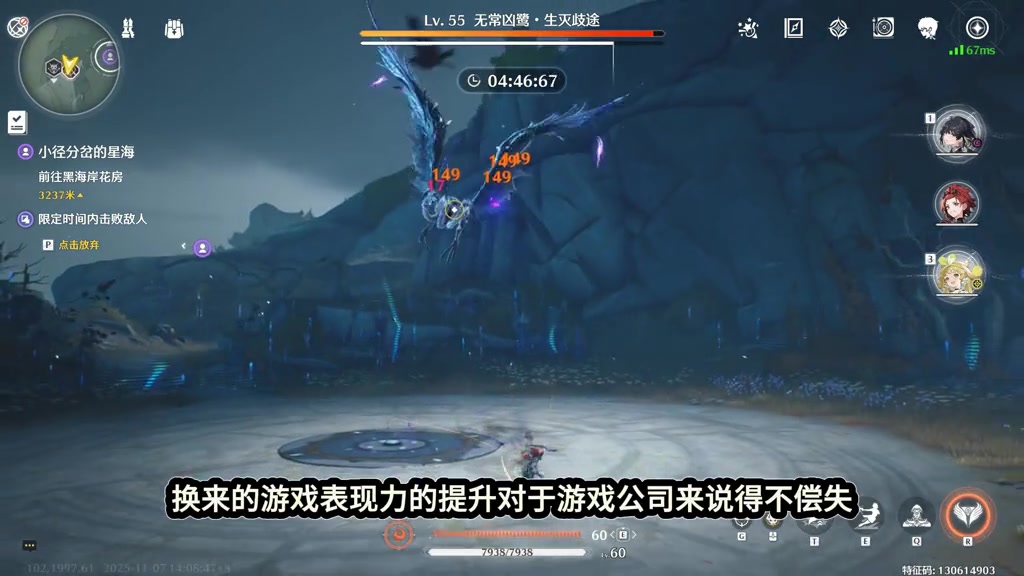
The official statement明确 lists “co-op,大型 boss battles, and multiplayer confrontation” as three core gameplay elements, with the scale of “multiplayer confrontation” being the most悬念. Current open-world online games generally remain at 4-8 player squad cooperation. The subtitle’s two possibilities — “Hundred Night Battles” (a limited battlefield in the game Yan Yun Shi Liu Sheng) and “thousand-player simultaneous攻伐” — reveal the spectrum of technical ambition. The former relies on shard + instancing technology, while the latter requires突破 network synchronization bottlenecks and client rendering limits. If miHoYo chooses the latter, it may adopt a “layered synchronization” architecture: at the macro level (thousand-player city battles), use prediction algorithms + state compression for low latency; at the micro level (hundred-player melee), enable local physics computation + keyframe broadcasting. This design could both replicate the epic feel of FF14’s Crystal Tower assaults and retain the tactical precision of Monster Hunter’s “five-player hunt.” More critically, it forces the evolution of the monetization model — when confrontation value surpasses gacha stats, player spending points will shift toward more strategically deep dimensions like personalized vehicles, battlefield command authority, and territory construction rights.
Conclusion
miHoYo’s “unnamed work” appears on the surface to be an upgrade of the tech stack (UE5), a shift in art style (realistic), and an expansion of genre (post-apocalyptic), but in reality it is a systemic reconstruction aimed at the next decade. It attempts to use AI to deconstruct the tool属性 of NPCs, use cross-platform connectivity to erase platform divides, and use hundred-player confrontation to redefine the social boundaries of open worlds. Of course, the risks are equally significant: the acceptance of realistic style in the domestic market remains to be verified; the uncontrollability of AI systems may破坏 narrative consistency; and over-emphasizing multiplayer could weaken the immersion of solo exploration. But looking back at the Genshin Impact era, miHoYo broke through the genre ceiling precisely with its “uncompromising cross-platform experience” and “refusal to simplify content density.” Now, as it sets its sights on the even tougher triple fortress of realistic open world + AI ecology + large-scale confrontation, the true decisive factor may not be technical parameters, but whether it can延续 its core ability — transforming hardcore technology into universal emotional resonance. After all, what players remember is never “what engine was used,” but that bell keeper in the ruined church who shed tears because of your greeting; that stranger who fought back-to-back with you against a giant beast on a thousand-player battlefield; and that moment when the entire virtual world held its breath for the first lighthouse jointly built by players lighting up on the server. The bullet is still in flight, and the world is waiting to be re-illuminated.