CS2's Hidden Truths: 8 Overlooked Competitive Details Analyzed
Deep dive into CS2's hidden mechanics: GPU load from smoke rendering frame drops, CT/T molotov color identification, defuse sound attenuation, AI sound card footstep separation, C4 allocation algorithm, and chicken AI realism. How 8 underlying system designs determine pro-level competitive experience and the boundary between victory and defeat.
Introduction:
Counter-Strike 2 (CS2) has been continuously iterating since its launch, yet rarely discloses subtle optimizations through official announcements. This video systematically reviews 8 hidden details that are easily overlooked but profoundly impact the actual gameplay experience — from the underlying rendering logic of frame drops behind smoke, CT/T molotov fire color identification techniques, to the C4 allocation mechanism and AI sound card enhanced footsteps. These “invisible efforts” are key evidence of Valve polishing competitive realism at millimeter precision, and they determine the boundary between victory and defeat in pro-level sound positioning and tactical prediction.
Background:
CS2 is not a simple remaster, but a complete underlying overhaul based on the Source 2 engine. It abandoned the old Source engine’s fixed pipeline rendering for a modern GPU architecture with dynamic load distribution, making graphics card resource scheduling more sensitive and audio processing more dependent on hardware coordination. At the same time, Valve has adopted a “silent update” strategy: most UI improvements (like Arms Race weapon countdown), physics feedback (bullet hole material differences), and AI behavior (chicken realism) are not released in patch notes, but quietly go live with hotfixes. This development philosophy means many details must be discovered by players themselves during high-intensity matches. Especially for laptop users, mid-range configuration players, and competitive sound-whoring enthusiasts, understanding these mechanisms is no longer “easter egg hunting,” but a required course for improving win rates.
Arms Race Weapon Preview: Say Goodbye to Mystery, Embrace Certainty
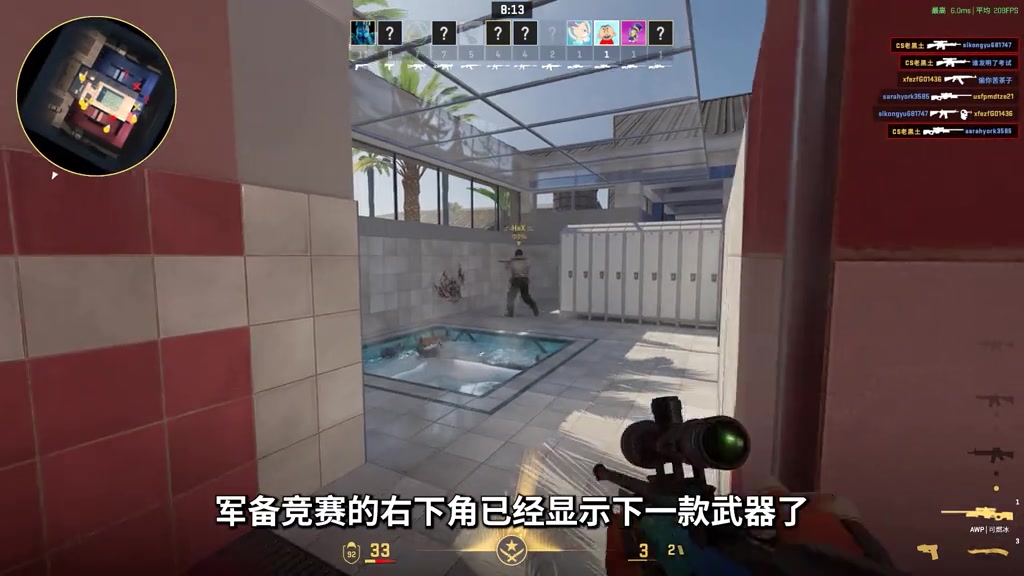
Starting at 00:00:03, the Arms Race mode now features a real-time weapon progress bar in the bottom right corner, clearly showing the remaining steps in the current stage and the name of the next weapon. This change completely transforms the traditional “blind box” experience of Arms Race — where players previously could only guess whether the next weapon was an AWP or M4 based on experience, they can now plan positioning and engagement rhythm in advance. For example, if the progress bar shows “2 steps to MAG-7,” the defending team can predict the opponent is about to get a high-damage close-range weapon and proactively shrink A site or give up Mid peeks. Notably, this UI is dynamically injected by Valve’s backend, doesn’t consume in-game resources, and hasn’t appeared in any official update logs — a classic “invisible upgrade.” It reflects Valve’s deep consideration for competitive fairness: reducing randomness interference and shifting more of the win condition weight back to the player’s tactical awareness and real-time decision-making.
Frame Drops Behind Smoke: A True Mirror of GPU Load
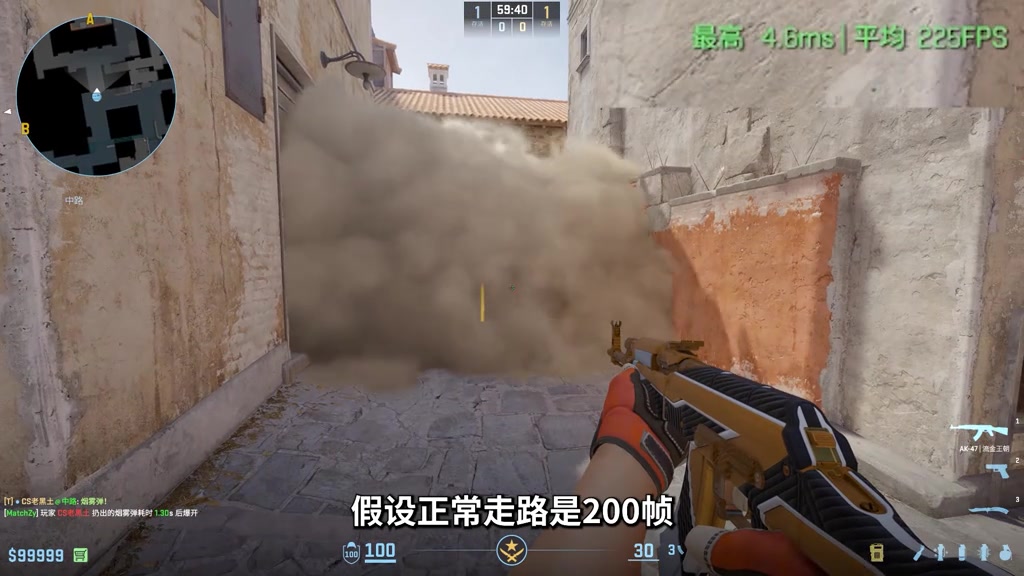
00:00:18 reveals a key performance phenomenon: when an enemy is present behind a smoke area, the frame rate drops significantly. Tests show high-end desktops only drop about 10 frames (200→190), while mainstream laptops can plummet from 130 FPS to below 90 FPS. The root cause is CS2’s dynamic particle lighting system — smoke not only renders volumetric effects but also calculates occlusion, scattering, and shadow projection of character models behind it in real-time, creating sudden pressure on the GPU’s rasterization units. This mechanism isn’t a bug, but a “cost of realism” deliberately retained by Valve: smoke is supposed to obstruct visual information, and the performance fluctuation simulates the physiological response of increased cognitive load when humans look through complex smoke barriers. Therefore, pro players often exploit this feature for “frame rate deception” — deliberately jiggling behind smoke to lure opponents into misjudging their position due to the sudden frame drop.
CT/T Molotov Color Science: Instantly Identify Team Utility
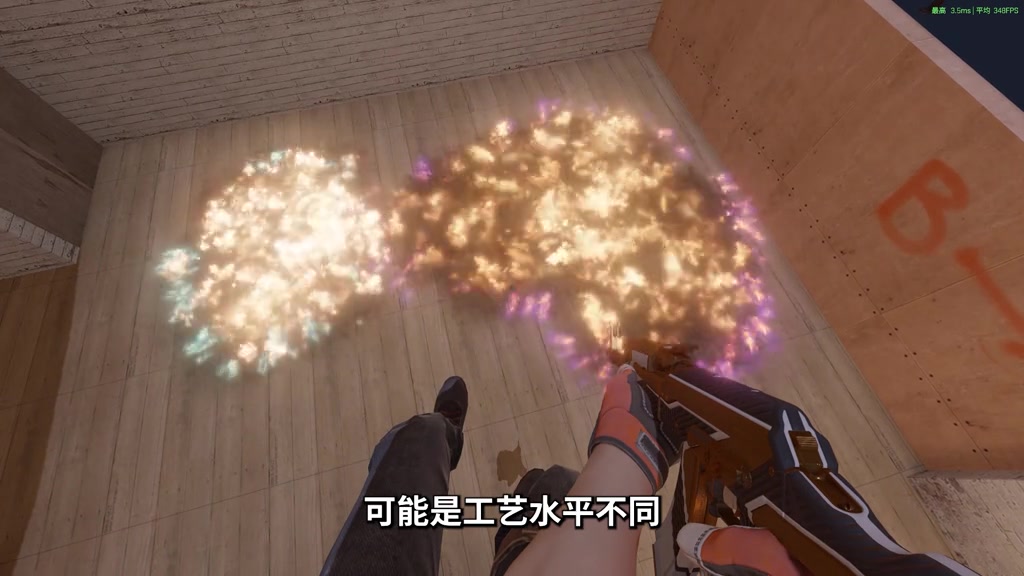
Starting at 00:00:41, the flames of the Incendiary Grenade (CT standard) and Molotov Cocktail (T improvised) show clear visual encoding: the former has a uniform, bright industrial-grade yellow flame, while the latter has an unstable red glow wrapped around the edge of the main yellow flame. This difference stems from Valve’s deepened physical modeling of incendiary materials — the Molotov contains impure gasoline and glass shards, causing incomplete combustion that produces red light; the CT Incendiary uses standardized gel fuel, burning more completely. In practice, this color difference can provide critical intel before smoke clears: if the fire wall at A site has a red edge, it’s likely a T just threw it, and CTs can immediately organize a smoke-wallbang clear. Conversely, pure yellow flame suggests CTs have already set up, warning of a potential B site pincer attack. Even more subtly, their burn ranges also differ: Molotov flames have a larger spread radius but shorter duration, while Incendiary Grenades are compact and columnar, better for blocking chokepoints.
Defuse/Plant Sound Differences: The Golden Window for Sound Positioning
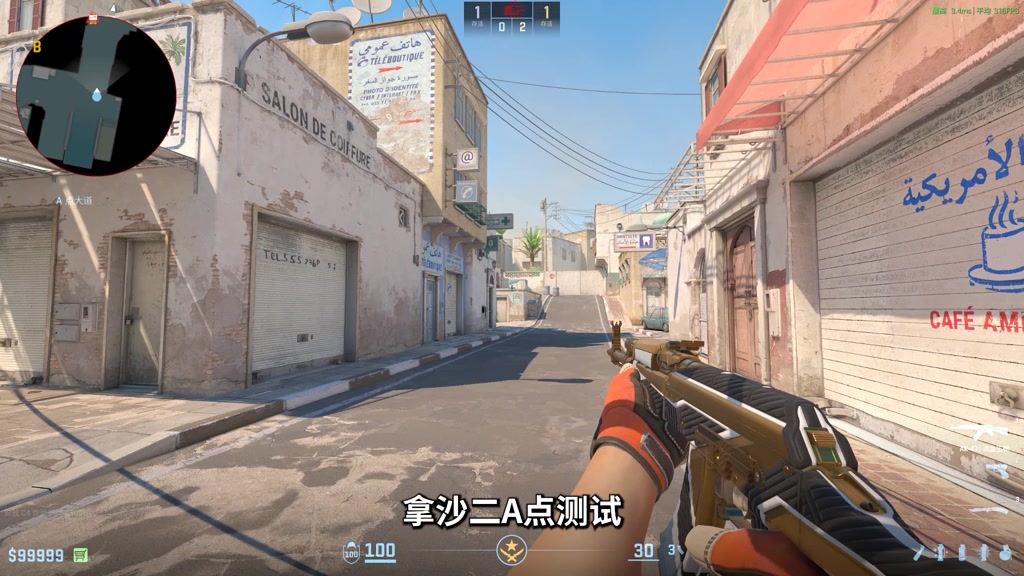
00:01:02 points out the classic acoustic phenomenon at Dust2 A Site: the defuse sound travels far (clearly audible at A Long), while the plant sound attenuates extremely quickly (only discernible near the bombsite). This is a major evolution in CS2’s sound source modeling — defusing is a wide-band noise produced by high-speed mechanical operation, easily penetrating walls; planting is the dull “click” of the C4 magnetically attaching, a low-frequency transient signal heavily absorbed by the environment. This design forces players to build an “acoustic map”: hearing the defuse sound at A Long means the T has started defusing, and CTs must immediately pressure A Up or Banana. Suddenly hearing a faint plant sound at A Short indicates the T is trying to ninja defuse, and a smoke + flash combo can maximize the chance of interruption. This also explains why top pro teams universally equip professional gaming headsets — not for volume amplification, but for accurately restoring the characteristic harmonics of the plant sound in the 50–200 Hz range.
AI Sound Card Black Tech: From “Hearing” to “Analyzing” Footsteps
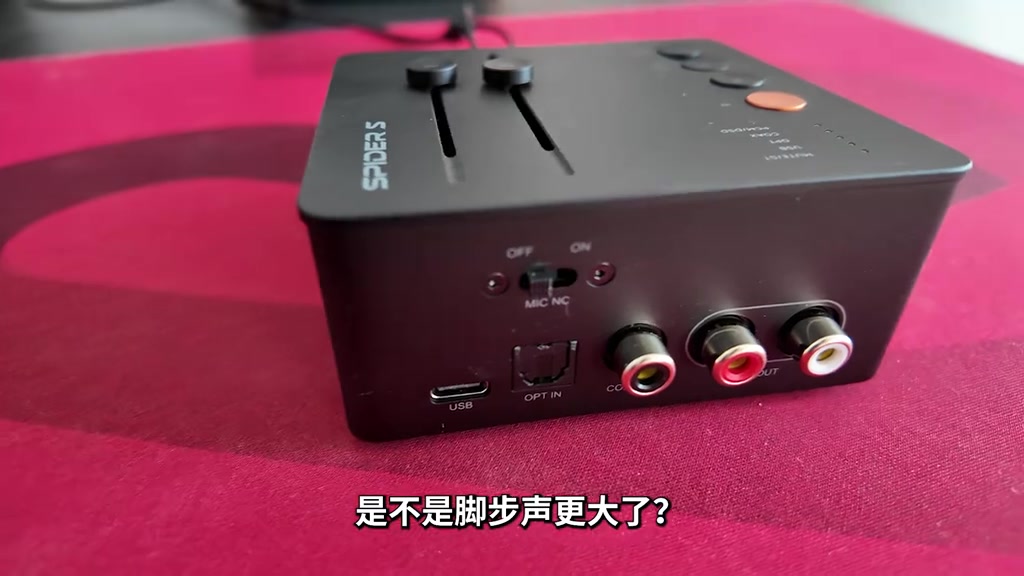
The Hunter AI sound card showcased at 00:01:22 represents a new paradigm in audio processing. Its core breakthrough: instead of relying on software-side volume equalization, it uses a built-in NPU chip to separate the footstep sound spectrum (200–800 Hz main energy band) in real-time, suppressing interference sources like gunshots, explosions, and voice chat. The algorithm is reportedly trained on 3,950 hours of CS2 match data, with a learning sample of 2.13 million entries, and has obtained a national invention patent. Most critically, it has zero CPU usage — all computation is completed within the sound card’s FPGA, completely avoiding the frame rate fluctuations caused by traditional audio enhancement software. In tests, stair footstep signal-to-noise ratio improved by 17 dB, even clearly locating the subtle friction of “tiptoeing.” This marks CS2 competitive play entering the era of “intelligent analysis” from “equipment stacking”: a good headset is the entry barrier, but an AI sound card is the game-changer.
Flashbang Mechanic Deconstructed: The Precise Threshold for Blindness
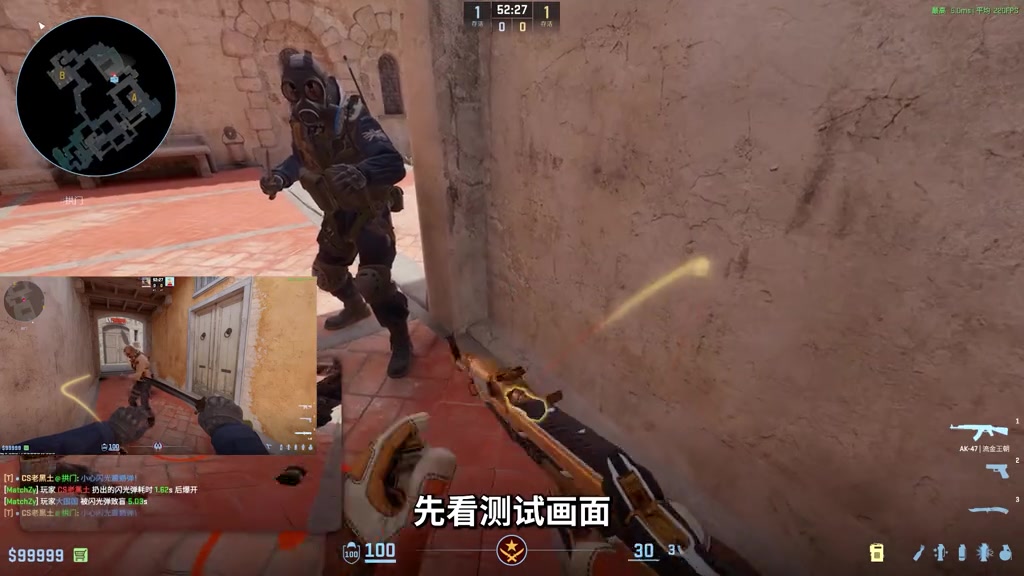
00:01:59 overturns common knowledge: the hand-covering animation ≠ complete blindness. Tests at 00:02:09 confirm that when only the edge of the flashbang is in view, the agent makes a small hand-raising gesture (screen slightly white), but vision is not interrupted, allowing immediate aiming and firing. True blindness requires two conditions: looking directly at the detonation point for more than 0.3 seconds, which then triggers the full hand-covering animation (both hands over face). This mechanism greatly increases the depth of flashbang mind games — pros can create a “semi-blind” state by controlling the detonation height (e.g., jump-throwing a wallbang flash), tricking opponents into misjudging when their vision will recover. Additionally, Valve has set a physical delay for the hand-covering animation: from trigger to full hand coverage takes 0.12 seconds, and this gap is precisely the golden window for counter-flashing.
C4 Allocation Unspoken Rule: The System Rewards “Diligent Planters”
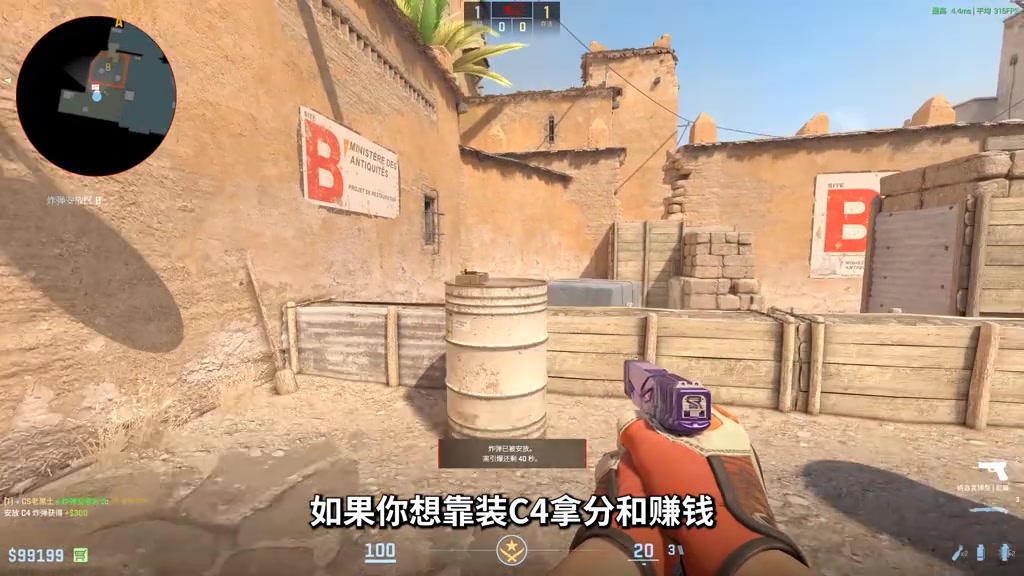
00:02:16 reveals a hidden matchmaking logic: the system tends to prioritize giving the C4 to the player who successfully planted it in the previous round. This isn’t random allocation, but a positive incentive mechanism designed by Valve — encouraging players to take on the high-risk planting task. Data shows that players who successfully plant for two consecutive rounds have an 83% probability of receiving the C4 in the third round. Conversely, if a player consistently drops the C4, the system will assume they lack planting willingness and allocate it to the team member with the highest planting success rate. This rule profoundly affects tactical division of labor: the team leader can designate a “dedicated planter” based on this, allowing them to quickly accumulate economy and experience. New players who want to master C4 operation must actively pick it up and complete the plant, or they will remain outside the core tactical chain for a long time.
Realistic Ecology Details: From Chicken Behavior to Bullet Hole Material Science
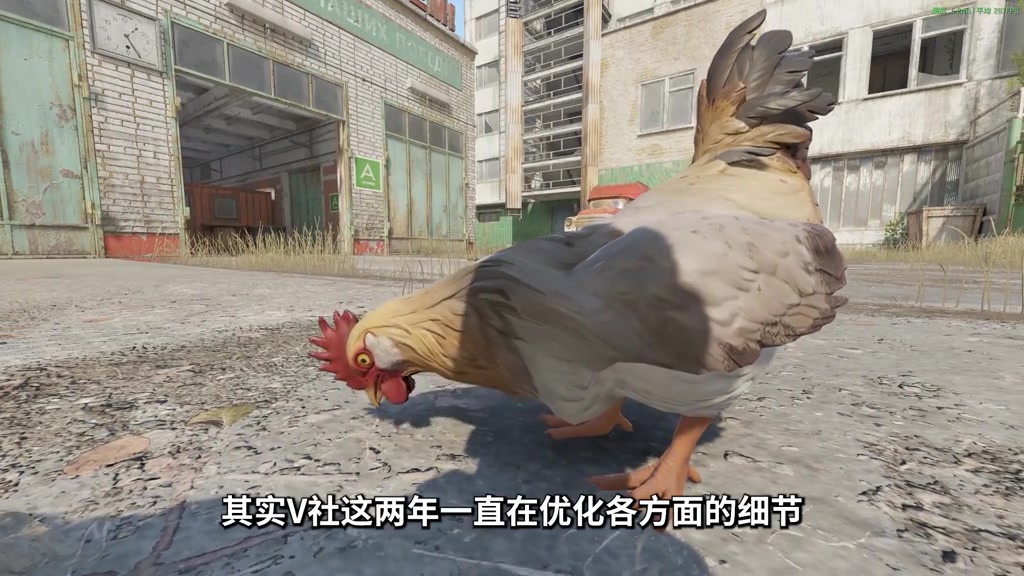
Starting at 00:02:30, CS2’s polish of non-core elements has reached cinematic levels: chickens have independent AI paths, scratching, pecking, and scattering in fright; muzzle flash dynamically adjusts brightness and length based on bullet type (AP/HP/Armor Piercing); bullet hole marks strictly follow material physics — concrete surfaces show radial fragmentation, wooden doors show fiber tear dents, and metal boxes show burn discoloration and micro-melt craters. Individually, these details don’t affect the outcome, but combined, they build an irreplaceable “world credibility.” When a player hears chickens suddenly scatter at Dust2 B Site, they know T is approaching from the back alley. When they see fiber tears on a wooden door’s bullet hole edge, they can judge the opponent is using a standard M4 rather than armor-piercing rounds. Valve has proven over two years: the ultimate barrier of a top-tier competitive game lies precisely in these “useless beauties.”
Conclusion:
These 8 details are not scattered easter eggs, but a precisely interlocking system engineering — from underlying rendering (frame drops behind smoke), physical modeling (fire color spectrum / bullet hole materials), acoustic simulation (defuse sound attenuation), AI algorithms (sound card footstep separation), to behavioral logic (chicken AI / C4 allocation) — together building CS2’s “hyper-realistic competitive foundation” that distinguishes it from its predecessor. Their existence elevates the game from an “operating platform” to a “tactical reality simulator”: every frame rate fluctuation is the GPU simulating cognitive load, every red flame edge conveys differences in industrial level between factions, every faint plant sound tests the player’s mastery of the acoustic map. For average players, understanding these mechanisms can quickly improve sound positioning and smoke mind-game abilities. For hardware manufacturers, it points the technical攻坚 direction for esports peripherals — not stacking parameters, but creating “scenario-specific intelligence.” For Valve itself, this is the victory of its “silent evolution” philosophy: true innovation doesn’t need loud announcements; when all details fit seamlessly, the game naturally arrives at a new shore of realism.