7 CS2 Trivia Facts You Definitely Never Noticed!
Deep dive into CS2's hidden mechanics: knife muscle memory system, smoke grenade identity authentication, corpse direction indicators, C4 guided missile, billboard number overflow, and shutter breathing mechanism. 7 physics-level easter eggs analyzing the game's underlying logic.
7 CS2 Trivia Facts You Definitely Never Noticed!
Do you think you’re a CS2 veteran? Knifing, smoking, death poses… these operations seem familiar, but the video drops 7 trivia facts that might make even a 5000-hour veteran rub their eyes — “Wait… that can work like that?!” This article doesn’t cover tactics or spray control; it digs into those “physics-level easter eggs” and “programmer laziness moments” hidden in the folds of the code. Ready to refresh your understanding? Let’s dive in!
Background: Trivia Isn’t Bugs, It’s CS2’s “Hidden Operating System”
Counter-Strike 2 (CS2), as Valve’s hardcore FPS rebuilt with the Source 2 engine, appears on the surface to be a contest of aim and tactics, but secretly hides a precision physics simulation system — from the air resistance on a knife swing, to the angular momentum conservation of a rolling corpse, to the UI boundary bug of billboard number overflow. These details aren’t explicitly documented features, but “behavioral residues” accidentally discovered through players’ repeated “stress testing” (like knifing 100 times in a row, repeatedly jumping off buildings to refresh the billboard). They don’t directly affect the outcome, but like the breathing rhythm of the game world, they quietly define what “soulful realism” means. And this video is exactly the seven-layer easter egg of CS2 unlocked by this group of “folk physicists” through crazy tricks like 0.1-second squirrel-style mouse release, cross-faction smoke pickup, and peeking through the Nuke B site shutters.
Knifing Has “Muscle Memory” — Your Hand Really Does Get Tired!
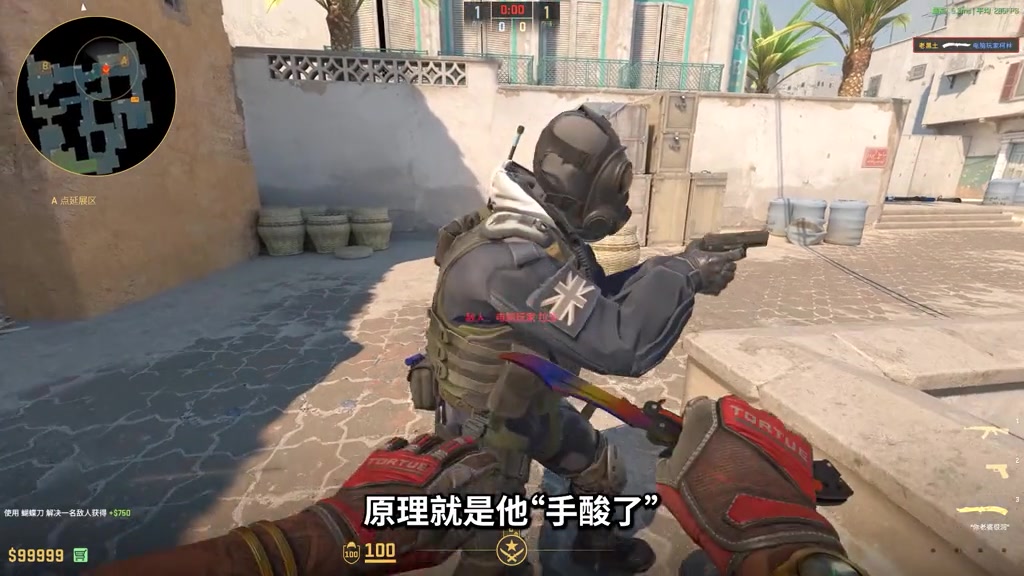
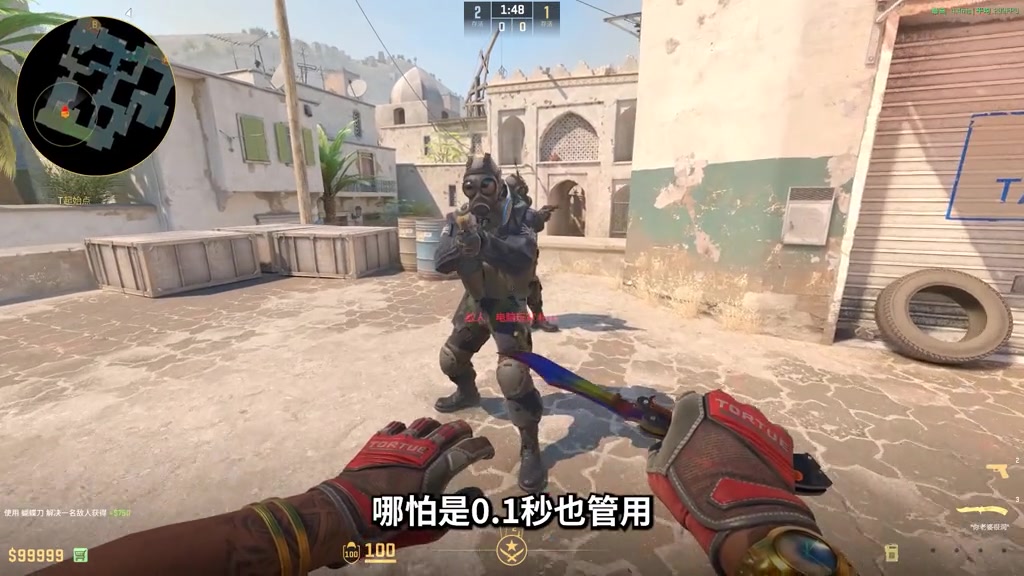
You think knifing is just about click speed? Wrong! CS2 secretly adds a “biofeedback system” to your forearm. The video clearly points out: the classic “two light, one heavy” combo can kill one enemy, but if the first swing misses, no matter how precise the subsequent two-light-one-heavy is, it won’t kill. Even more absurd — even if the first swing successfully kills one enemy, using two-light-one-heavy on a second enemy immediately after still won’t kill them. This isn’t mysticism, but an engine-built-in “Arm Fatigue State”: each successful melee kill triggers a brief attack module cooldown, similar to micro-spasms after muscle fatigue. And the solution is both absurd and real — release the left mouse button for 0.1 seconds to reset the state! This means the top-tier knifer’s “knife breathing technique” isn’t about brute force clicking, but precise “button gap control”: knife immediately → lift finger → millisecond pause → next click at full power. This explains why pro players always have an imperceptible “wrist lift” before knifing — it’s not showing off, it’s stretching their virtual biceps!
Smoke Grenades Recognize “Origin” Not “Owner” — Color ID Is Hardcoded
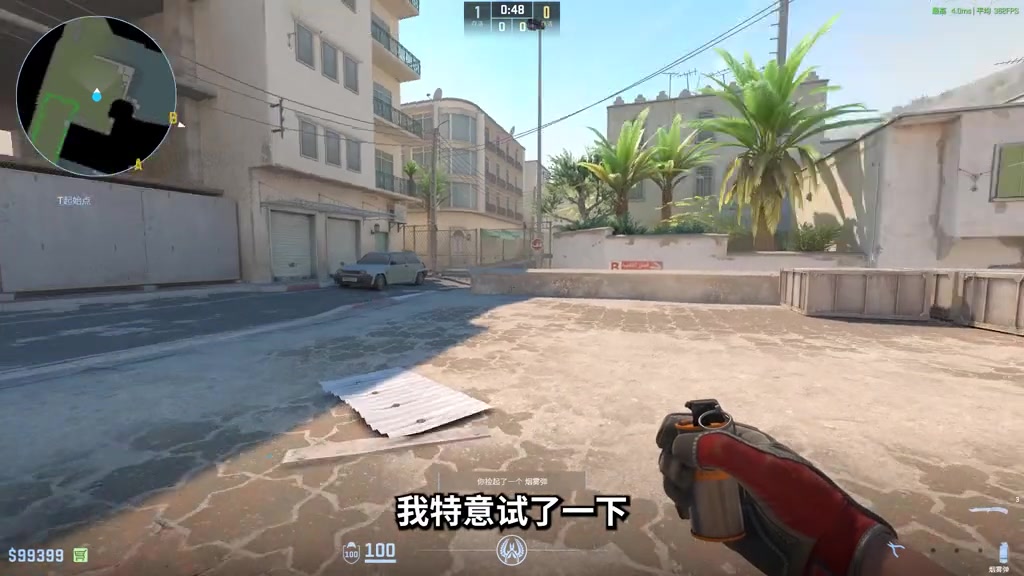
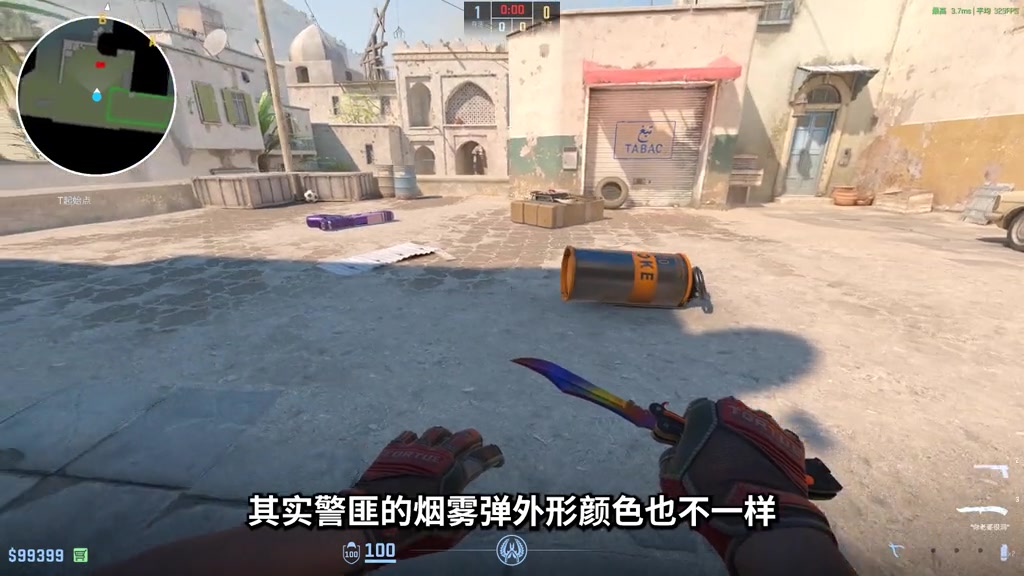
It’s common knowledge that CT and T smoke grenades have different colors: T smokes are earthy yellow (like freshly dug mud), while CT smokes are cooler gray — making it easy for teammates to identify the source. But the video throws out a killer question: “If a CT picks up a T’s dropped smoke and throws it, what color is the smoke?” The answer hits the underlying logic: The smoke color is bound to the item’s ID, not the holder’s faction. Test results: a CT throwing a T smoke still produces a strong earthy yellow cloud! This means the engine only reads the material parameters of the item model itself when rendering, completely ignoring the character’s identity. Even more interesting, the two smoke grenades have different “bare faces” too — the T model itself has a yellow filter, while the CT model is gray from the factory. This design seems lazy, but actually hides tactical implications: for example, a T could deliberately drop a smoke to lure a CT into picking it up, then reverse-locate them by the smoke color. Or an attacking team could grab a CT smoke and throw a gray cloud to create a “false ally signal.” Smoke, from now on, becomes a lying spy.
Corpses Are Live Maps: Death Pose Reveals Bullet Direction, But Watch Out for “Ankle Stabbers”
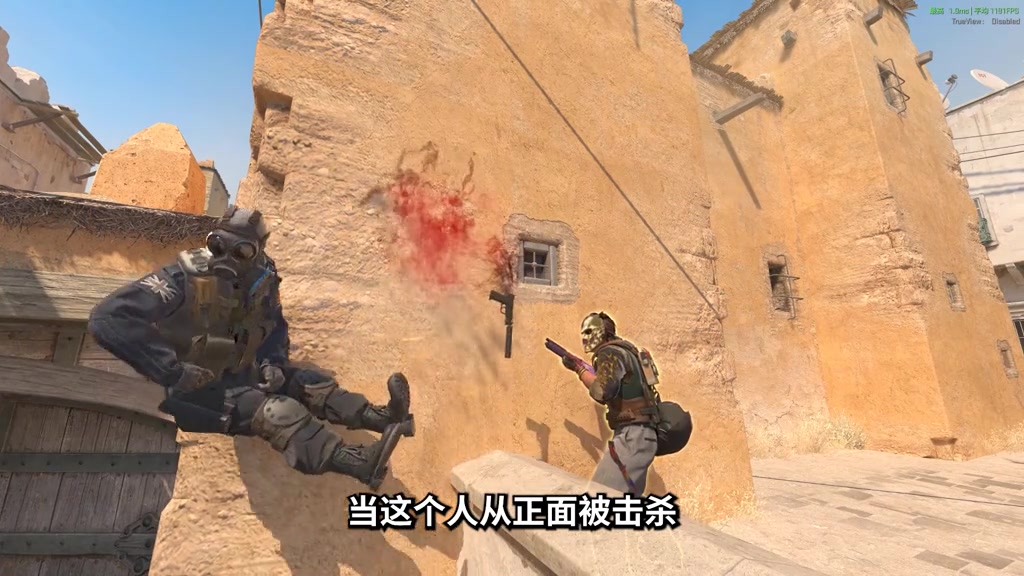
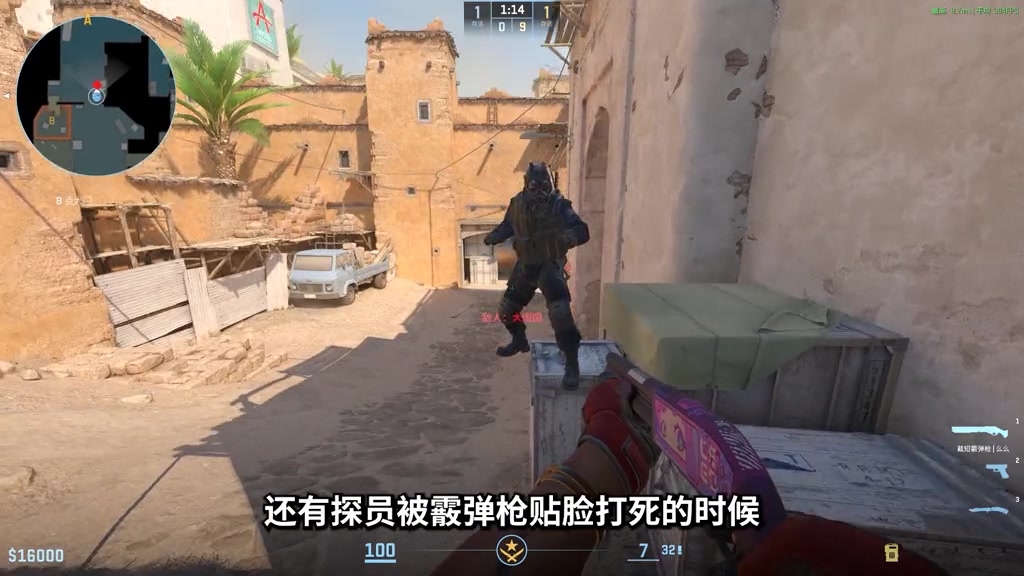
CS2’s physics engine makes every corpse a silent informant. The video reveals a key rule: Shot from the front → falls backward; shot from the back → falls forward. On multi-intersection maps like Mirage or Dust2 Banana, the limb direction of a teammate’s corpse the moment they die is a live arrow pointing to the enemy’s hiding spot! For example, if a teammate in the middle of the sand is lying face down toward A Long, you can be fairly certain someone is holding A Site. However, this “autopsy report” has two disclaimers: first, encountering an “ankle stabber” (killed by a knife from below), the corpse often rolls backward abnormally, completely betraying its compass function. Second, a point-blank shotgun blast creates such massive impact that the corpse spins and tumbles in the air, its pose as chaotic as an abstract painting. However, about 85% of kills in practice come from chest/head shots, so this technique remains a high-value option in clutch information warfare — after all, it’s better than blindly shooting into the void.
C4 Drop Is a “Guided Missile” — A-Site Planters, Stay Away from Cliff Edges
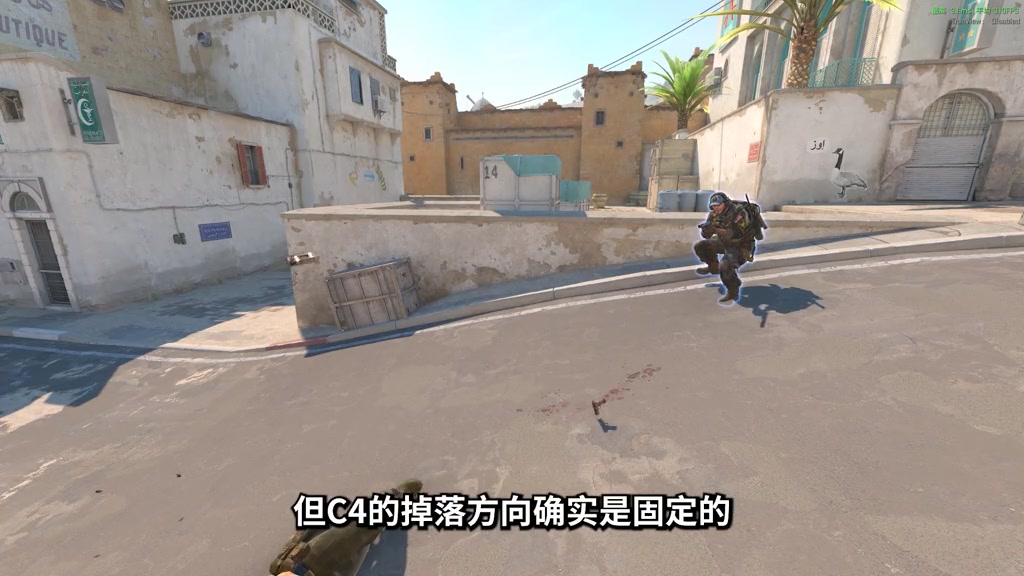
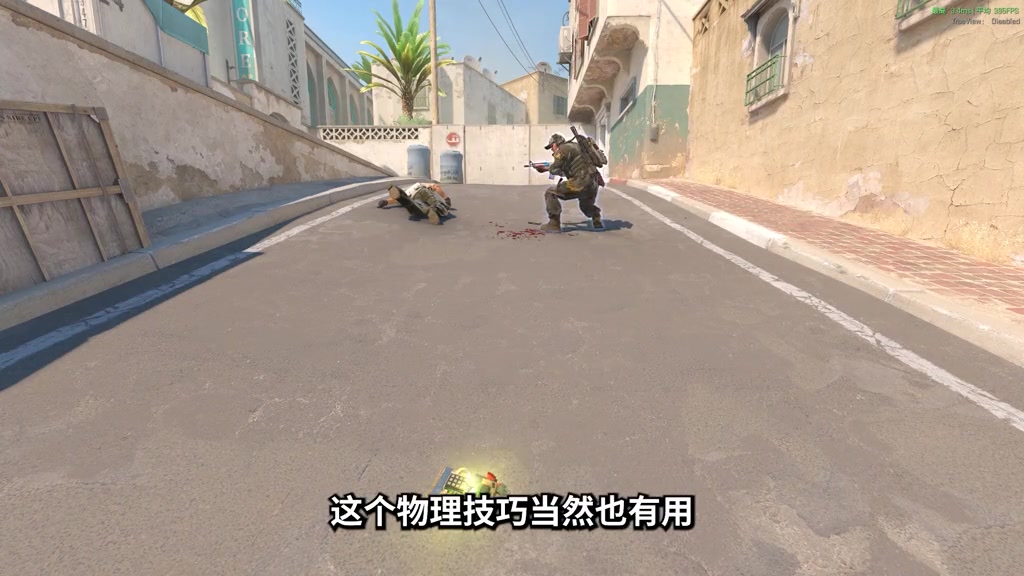
The C4’s drop trajectory is by no means a random parabola, but strictly follows a dual-lock mechanism of “player facing direction + fixed displacement.” The video emphasizes: The C4 always flies horizontally in the direction the carrier is facing at the moment of death, with a constant landing height and distance. This is a deadly detail on A Short (Inferno A site path) — if the bomb carrier is killed while fighting near the blue car and dies facing the bombsite (i.e., toward the inside of the map), the C4 will fly straight toward CT spawn! Even worse, if they’re standing at the edge of a cliff on A Short, the C4 might even fall off the map entirely, plunging the whole team into a desperate cycle of “the bomb is gone, but the enemy is still here.” The solution is simple: When playing A Short, always leave a safety margin. Better to hold back half a step than to be the cliff bomb carrier. This rule also empowers the defense — CTs can predict the bomb carrier’s habitual position and pre-aim along their likely “throw path,” intercepting the bomb before they even see it.
The Billboard Counts Sheep, But Three Digits Is Its Cognitive Ceiling
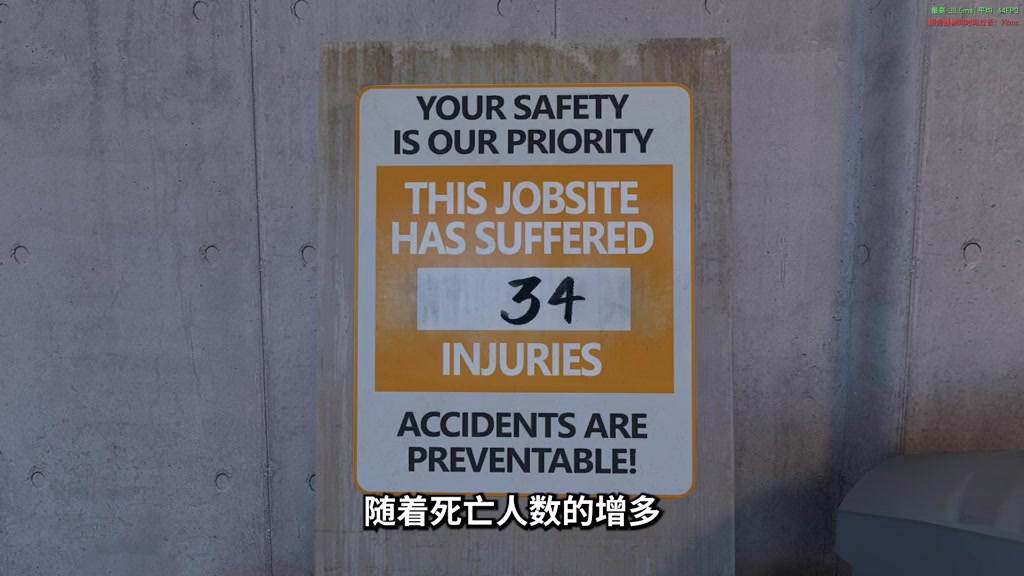
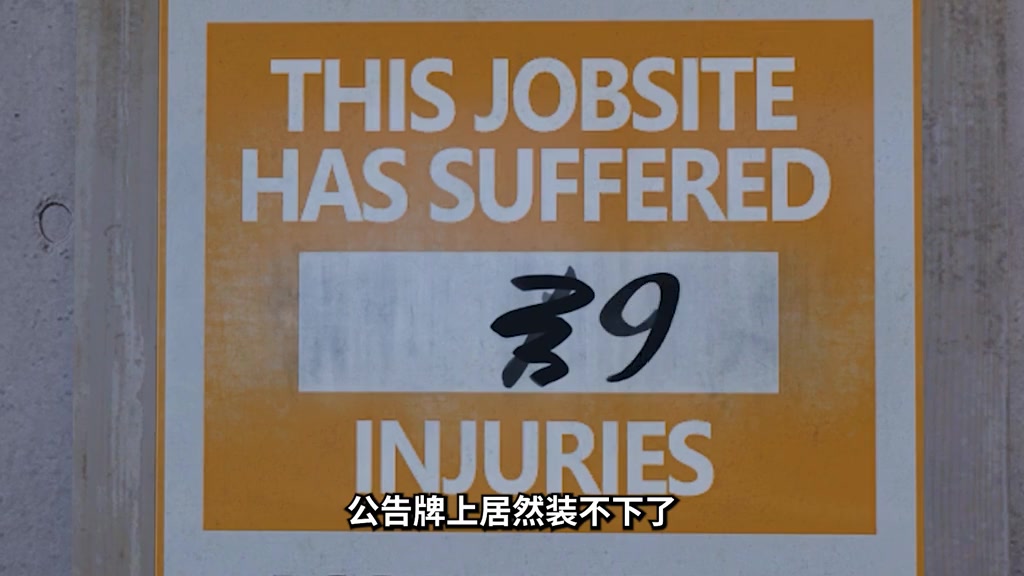
On the Office map, there’s a “performance art installation” forgotten by the developers: Every time any character dies from falling from any height, the “Workplace Accidents” number on the spawn billboard increases by 1. This isn’t an easter egg; it’s a real global counter! The video shows that as the number of jumpers increases, the count climbs from 001 all the way to 999 — and then, the billboard on screen freezes, with the last digit flashing wildly, as if screaming: “I CAN’T HOLD ANY MORE!!” This exposes the original UI design assumption: the developers only预留 two-digit display space, thinking “no normal match would have this many deaths.” The players immediately proved them wrong with a “nuclear power plant-style jumping contest.” This detail is both humorous and profound: it proves CS2’s world is self-consistent — even the NPC billboard silently records every absurd death, but its computing power hasn’t learned how to carry over.
Nuke’s Shutters Breathe, and B Site Doors Can Do a “Single Door” Magic Trick
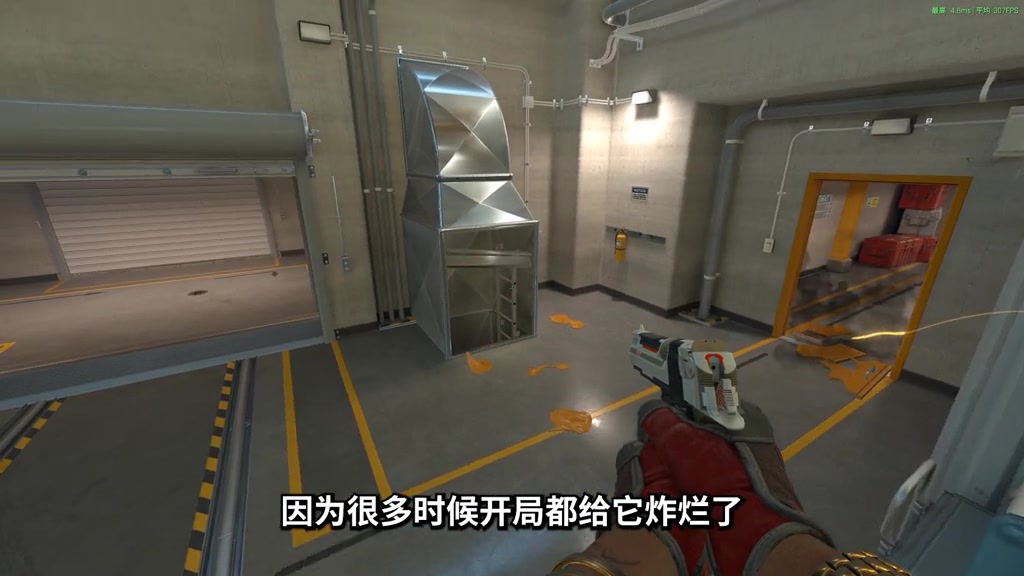
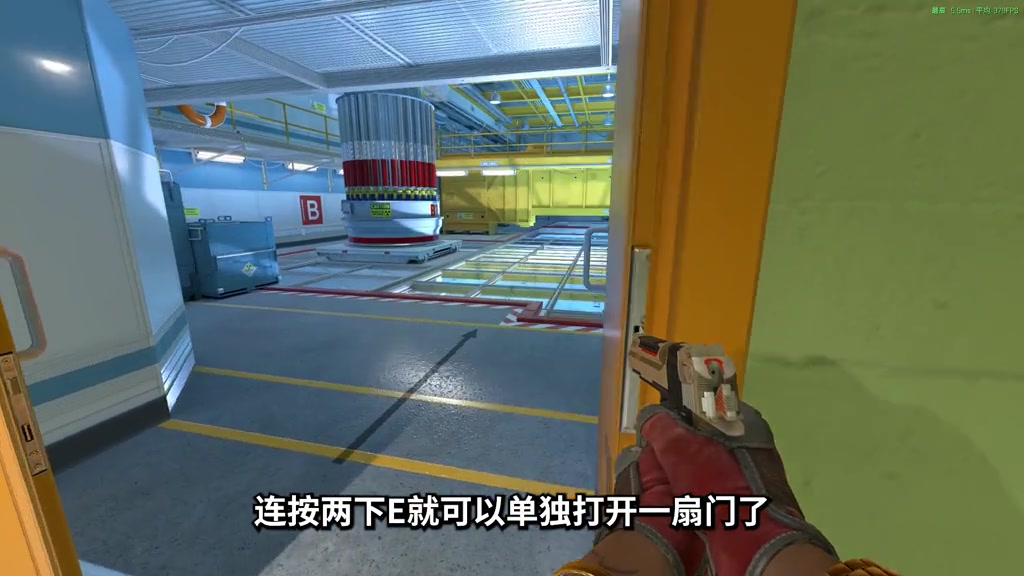
Nuke is known as CS2’s king of interactivity, but most people only know about blowing up doors, not the doors behind the doors. The video reveals: The shutters in the vent area can be manually opened and closed — press E to close them, creating temporary cover. Unfortunately, this “silent door” is often destroyed by a flashbang at the start of the round, becoming background decoration. Even more impressive are the B Site double doors: normally, pressing E pushes both doors open simultaneously, exposing you completely — basically suicide. But if you position yourself against the left door frame and quickly press E twice, the engine will prioritize responding to the single-side command, opening only the left door! The beauty of this is “controllable vision”: with only the left door open, you can block the left entrance to B Site and focus entirely on enemies entering from the right, instantly turning a 1v2 into a fair 1v1. This is essentially a “frame-level priority bug” in Source 2’s input判定, but players have tamed it into a tactical switch — it turns out the most hardcore cheat is understanding the engine’s temperament.
Conclusion: CS2’s Depth Lies in the Folds of “Unimportant” Details
These 7 trivia facts are superficially fun conversation starters, but at their core, they are the developing fluid of CS2’s design philosophy: it rejects the crude stacking of “functionalism” and insists on weaving the world’s capillaries with physical rules — knives get tired, smoke recognizes its origin, corpses point the way, C4 has navigation, billboards crash, and shutters can breathe. These “unimportant” details are precisely what构成 CS2’s soulful thickness that distinguishes it from other FPS games. They don’t provide instant win rate boosts, but quietly reshape players’ cognitive habits: you’ll start paying attention to every corpse’s orientation, subconsciously release the mouse for 0.1 seconds, and check the inventory icon color before throwing a smoke… This immersive observational training will eventually沉淀 into “game sense” that transcends reaction speed. So don’t rush to mock “what’s the use of this?” True masters have long turned the billboard’s flashing frequency into the rhythm of victory. Next time you jump off a building, remember to thank the billboard — it’s the only loyal audience on the entire map that witnesses all your absurd deaths.